image4-16.jpeg

Novartis Hyderabad - Scaling a Modern Workspace

Novartis - Scaling a Modern Workplace for Accelerated Growth and Agility

Flexible Workspaces: Scaling Novartis for Dynamic Growth.

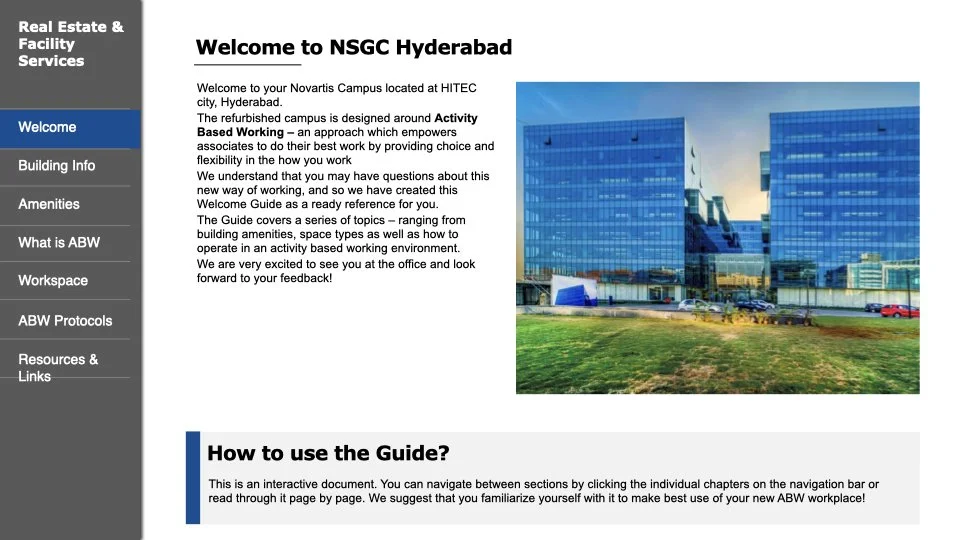
As the Change Management Specialist and Workplace Amenity Strategy Lead for Novartis' NGSC Hyderabad, I spearheaded the strategic evolution of their newly occupied premises, a critical multi-phase project initiated in 2016 and concluding in September 2020. This involved meticulously conducting post-occupancy studies, then designing and implementing a fiscally prudent Activity Based Working (ABW) transformation and a comprehensive amenity restack. My role was to ensure that while strategically increasing density within the existing footprint, these changes significantly enhanced employee experience, fostered collaboration, and solidified the effectiveness of Novartis' real estate to support its dynamic growth trajectory in Hyderabad.

PROJECT DETAILS

Project Experience: 2019 - 2020, Hyderabad

My Role: Senior Strategist, Change Management Specialist

Contribution: Change Management, Amenity Strategy

Team: Gensler - Shravan Bendapudi

Project Copyright Gensler. All rights reserved.


Challenge

In 2016, shortly after occupying its newly designed premises in HITEC City, Hyderabad, Novartis experienced unexpected and rapid business growth. This accelerated expansion strained the initial workplace capacity and design objectives. The core challenge was to significantly increase the building's occupancy (from an initially optimized 5,500 to a target of 6,500 employees) without adversely impacting employee experience, compromising the quality of the relatively new infrastructure, or incurring substantial additional capital expenditure. Furthermore, the growing need for team-based working necessitated a more agile and collaborative environment.


Opportunity

Novartis recognized that this rapid growth presented a strategic opportunity to evolve its physical workspace into a highly efficient, flexible, and future-ready asset. By strategically adapting its existing, modern campus, Novartis could:

  • Maximize its significant real estate investment by consolidating accelerating growth within the current building footprint.

  • Embrace Activity Based Working (ABW) to empower employees with choice and flexibility, fostering better collaboration and productivity.

  • Enhance employee satisfaction and well-being by providing diverse work settings and world-class amenities tailored to a larger, dynamic population.

  • Implement these transformative changes with fiscal prudence, showcasing an adaptable real estate strategy.

  • Reinforce Hyderabad's position as a vibrant National Global Service Center (NGSC) hub, attracting and retaining top talent.


Action

Gensler partnered with Novartis in a multi-phase strategic engagement to transform the NGSC Hyderabad campus:

  1. Post-Occupancy Optimization (from 2016): Gensler conducted a comprehensive post-occupancy study, utilizing interviews, a time utilization study, focus groups, and employee surveys. Based on these insights, recommendations were provided that successfully increased the building's effective occupancy to 5,500 employees, ensuring no negative impact on the employee experience.

  2. Activity Based Working (ABW) Feasibility and Implementation: Responding to continued growth and evolving team working needs, Gensler then evaluated the feasibility of implementing ABW across the workplace floors. Despite the relatively new construction, the implementation was carefully planned to be frugal, involving detailed studies and benchmark workplace visits before a stratified capital expenditure plan was developed for the transformation.

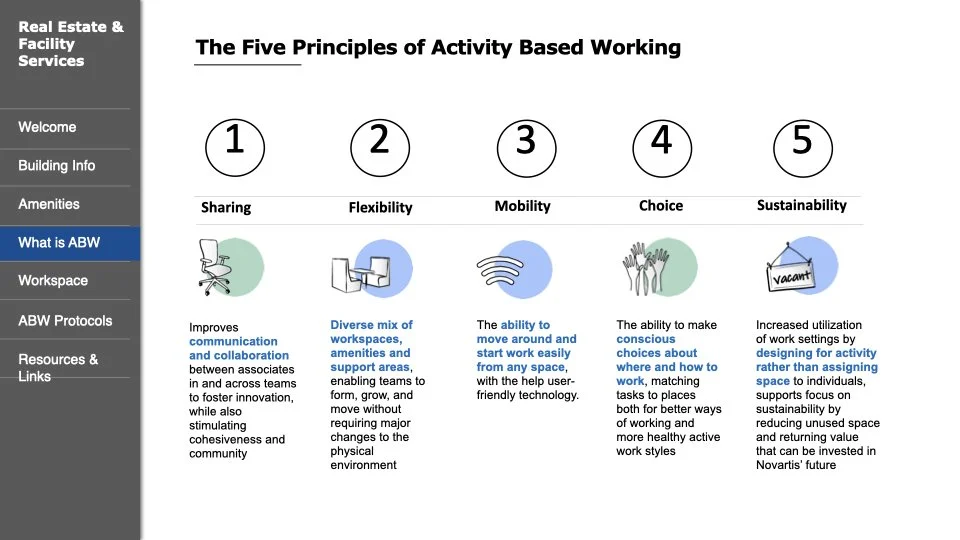
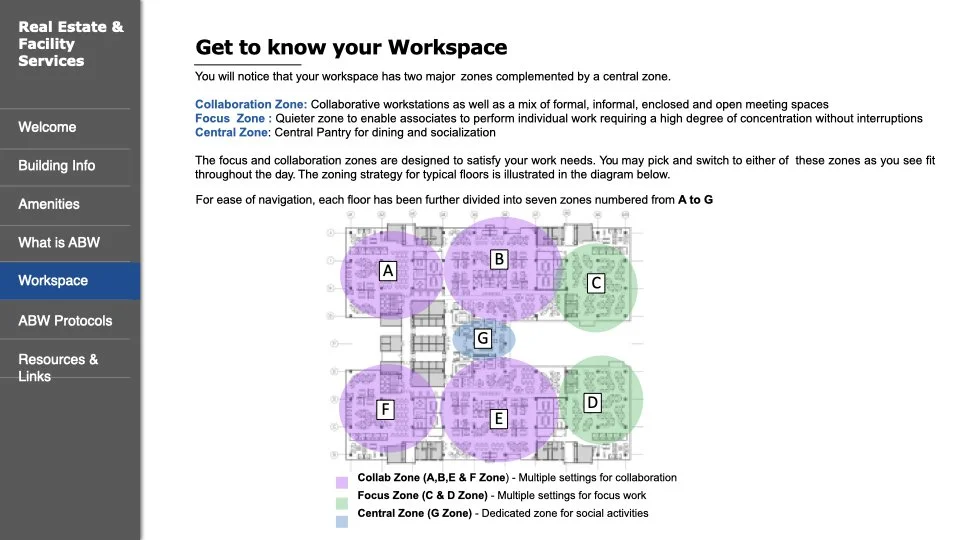
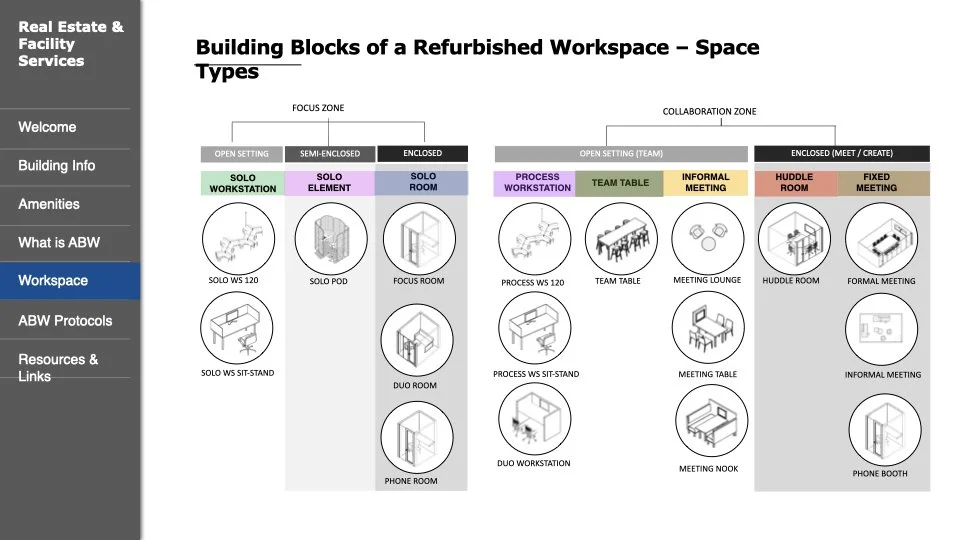
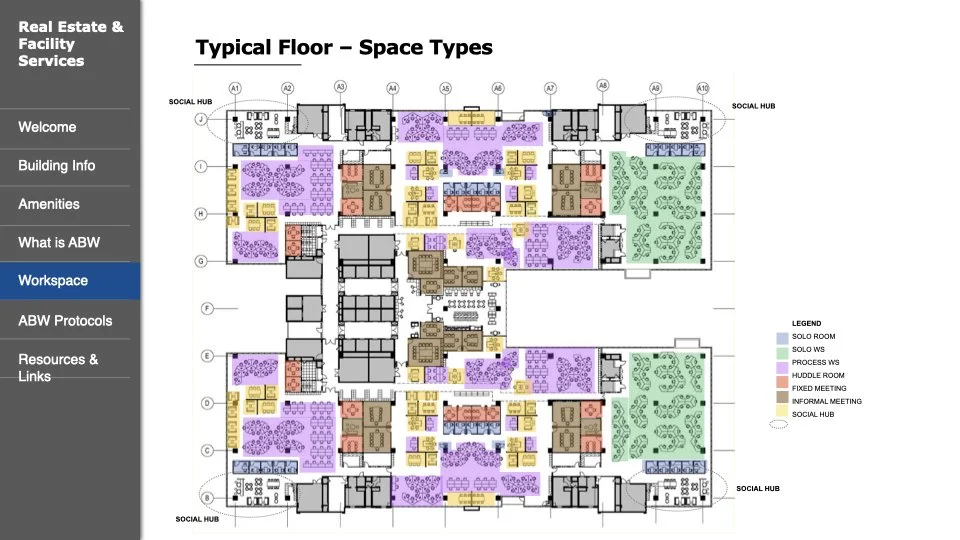
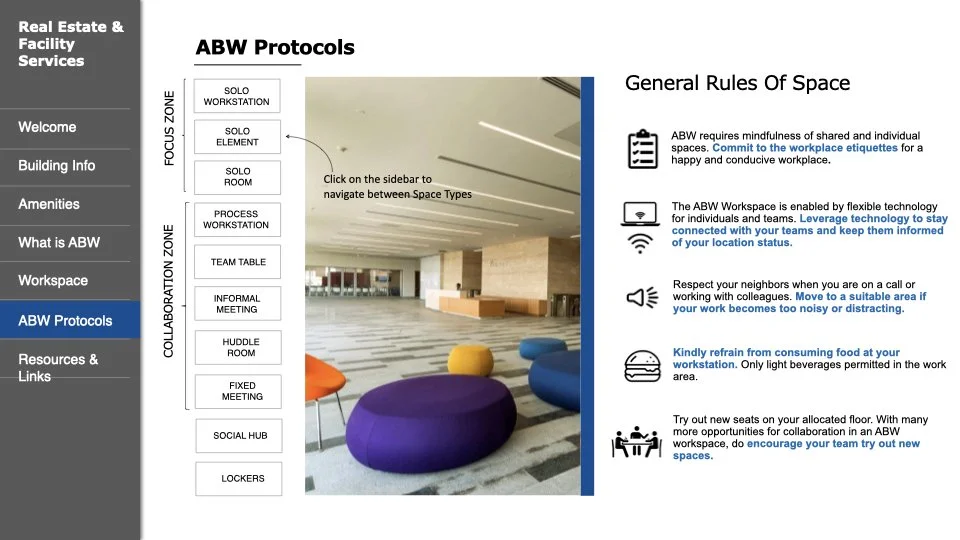
    The ABW design was built around five core principles: Sharing, Flexibility, Mobility, Choice, and Sustainability, creating diverse work settings in Collaboration, Focus, and Central Zones. These zones included Solo Workstations, Solo Elements, Solo Rooms, Process Workstations, Team Tables, Informal Meetings, Huddle Rooms, Fixed Meetings, and Phone Rooms/Booths.

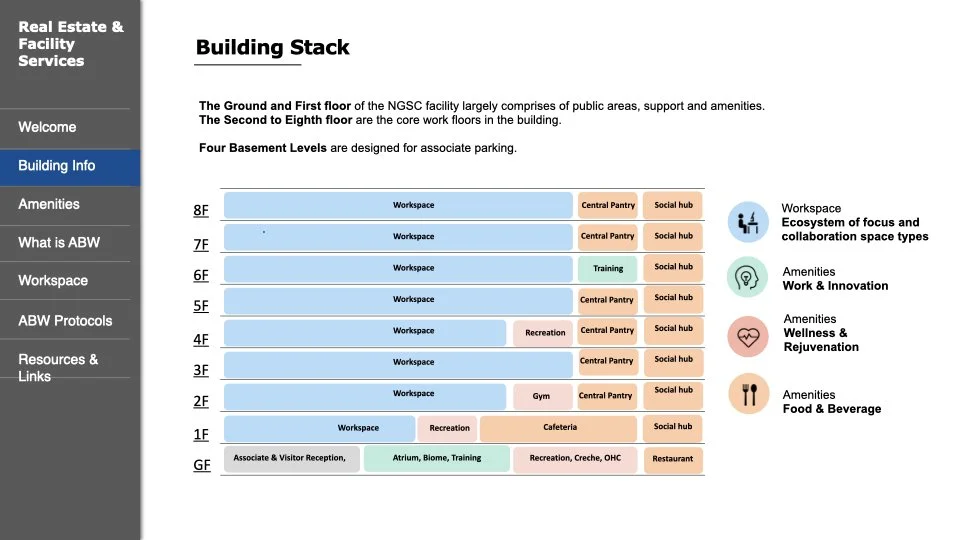
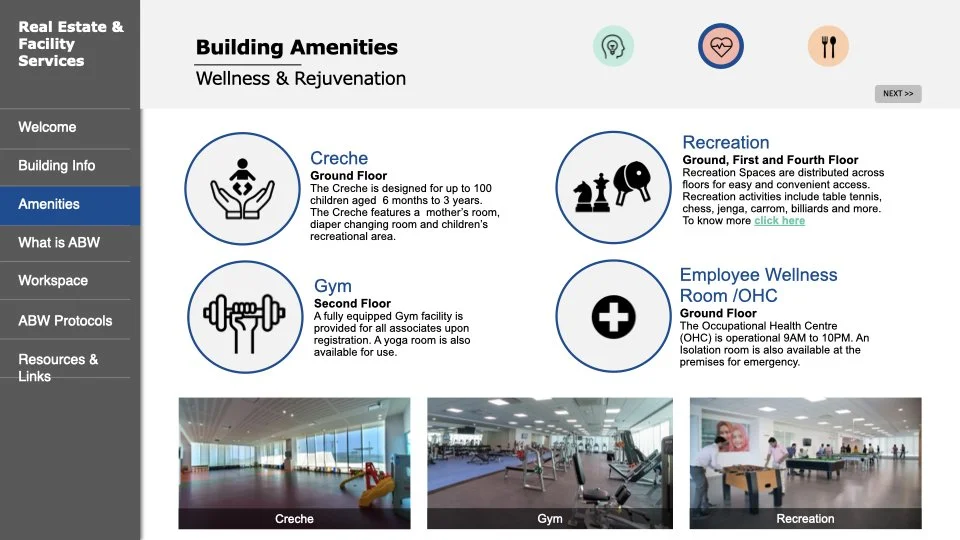
  3. Capacity Expansion and Amenity Restack: To accommodate the projected 6,500 employees, Gensler developed an amenity restack, resizing and enhancing shared spaces.

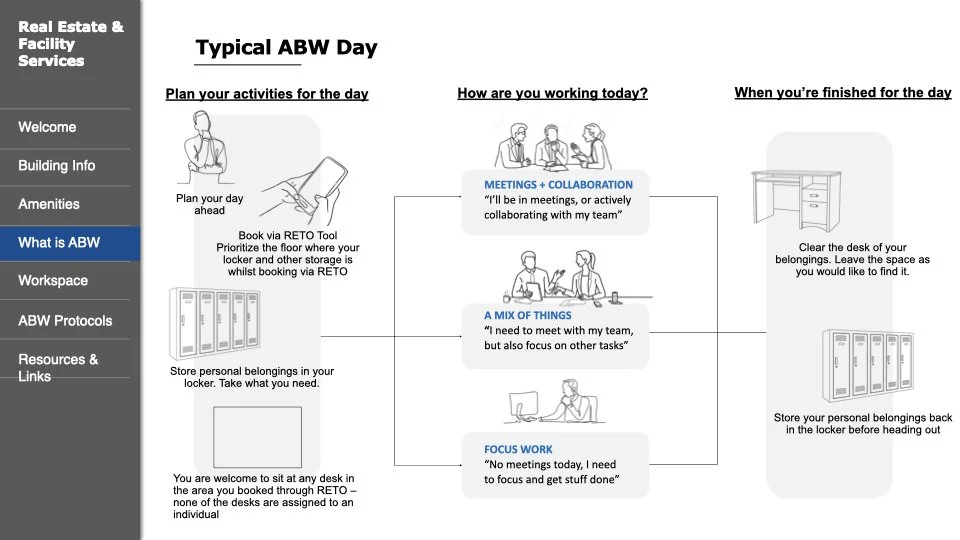
  4. Comprehensive Change Management and Enablement: Gensler led the change management process, crafting resources like the "NGSC Hyderabad Workplace Guide" (the provided presentation deck) to facilitate a smooth transition. This interactive guide educated employees on ABW principles, space types, protocols (e.g., desk booking via RETO 2.0, clean desk policy, locker usage, noise etiquette, food consumption guidelines), and helpful contacts, ensuring high adoption and satisfaction.


Outcome

The strategic transformation of the Novartis NGSC Hyderabad campus, completed by September 2020, yielded significant benefits:

  • Optimized Real Estate: The existing building successfully accommodated a vastly increased workforce of 6,500 employees, demonstrating exceptional real estate utilization and avoiding costly new construction.

  • Enhanced Employee Experience: Despite higher density, the ABW implementation and redesigned amenities resulted in high employee satisfaction, with most employees confirming their workplace experience was enhanced, supported by choice, flexibility, and a range of wellness and collaboration spaces.

  • Increased Agility and Collaboration: The ABW model fostered a more dynamic and collaborative environment, empowering employees to select work settings best suited for their tasks, thereby boosting productivity and team effectiveness.

  • Sustainable and Fiscally Prudent Growth: The project achieved its objectives with a frugal expenditure plan, proving that strategic adaptation of existing assets can be a highly effective and sustainable solution for rapid organizational growth.

  • Future-Ready Workplace: Novartis established a best-in-class, protocol-driven, and technologically integrated (RETO 2.0, Foodbook App) Activity Based Working environment, solidifying its NGSC Hyderabad campus as a leading example of modern workplace design.